The Evolution of B2B SaaS Monetization How Nue is Solving the AI Pricing Crisis through Unified Quote-to-Revenue Infrastructure

In the rapidly evolving landscape of business-to-business (B2B) artificial intelligence, a fundamental shift is occurring that transcends the technical capabilities of large language models and generative agents. While much of the public discourse remains focused on the "intelligence" of the product, industry insiders and venture capitalists are increasingly identifying a more existential challenge: the breakdown of traditional software monetization models. For nearly two decades, the "per-seat" subscription model served as the bedrock of the Software-as-a-Service (SaaS) industry. However, as AI agents begin to perform tasks that previously required human labor, the economic logic of charging per human user is collapsing. This shift has given rise to a new generation of financial infrastructure, led by platforms like Nue, which aim to bridge the gap between legacy billing systems and the fluid, consumption-based requirements of the AI era.
The core of the problem lies in the inherent value proposition of AI. Traditional SaaS tools were designed to increase the productivity of a human worker; therefore, charging per worker (or "seat") was a logical proxy for the value delivered. In contrast, agentic AI is designed to replace the worker or automate the task entirely. If a company deploys an AI agent that performs the workload of ten employees, a per-seat pricing model would result in the software vendor capturing only 10% of the potential revenue while providing 100% of the utility. Consequently, the B2B sector is witnessing a mass migration toward usage-based, credit-based, and outcome-based pricing models.
The Infrastructure Bottleneck and the Legacy Debt
The transition to these new pricing models is not merely a strategic choice but a significant technical hurdle. Most existing enterprise resource planning (ERP) and billing systems were architected for a static world. In the legacy "SaaS 1.0" environment, a company would set a price, create a SKU in their system, and leave it unchanged for years. Revenue operations (RevOps) teams functioned around predictable, monthly, or annual recurring revenue (MRR/ARR) cycles.
Today’s AI companies, however, require a level of agility that legacy stacks cannot support. The typical "quote-to-cash" process in a modern enterprise often involves four or five disparate systems: a Configure, Price, Quote (CPQ) tool for sales, a billing engine for invoicing, a separate metering layer to track API calls or tokens, and a revenue recognition system for the finance department. In most organizations, these systems are "duct-taped" together, as described by industry analysts. When a founder or a Chief Revenue Officer decides to experiment with a new pricing model—such as charging per successful "output" rather than per login—it often requires a multi-quarter engineering project to update the underlying data models across all these platforms.
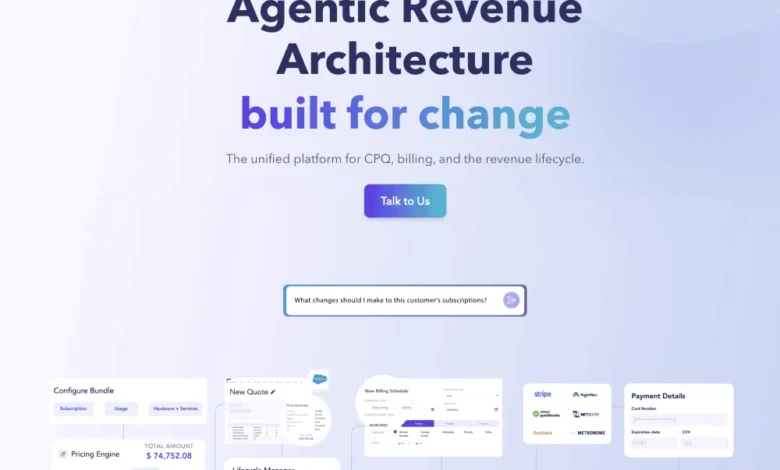
Nue has emerged as a specialized platform designed to collapse this fragmented stack. By unifying CPQ, billing, and revenue recognition into a single system of record, Nue allows companies to launch, iterate, and scale complex pricing models without the traditional overhead of rebuilding their financial infrastructure. This capability is becoming a competitive necessity rather than a luxury.
A Chronology of SaaS Monetization
To understand why Nue’s approach is gaining traction, it is helpful to examine the timeline of software monetization:
- The Perpetual License Era (Pre-2000s): Software was sold as a one-time capital expenditure. Updates were infrequent, and the relationship between vendor and customer was transactional.
- The Subscription Revolution (2000s–2015): Led by companies like Salesforce, the industry moved to "per-user, per-month" models. This created predictable recurring revenue and aligned vendor success with customer retention.
- The Rise of Usage-Based Pricing (2016–2022): Infrastructure-heavy companies like Snowflake and AWS demonstrated the power of consumption-based models. However, for most application-layer SaaS, per-seat remained the standard.
- The Agentic AI Pivot (2023–Present): The introduction of Generative AI forced a reckoning. With "seats" becoming irrelevant, companies began a frantic search for "Outcome-Based" pricing, where customers pay for the value created (e.g., a resolved customer service ticket or a completed legal brief).
Nue sits at the center of this fourth era. As AI companies move off per-seat models, they encounter the "operational gap." They have the data (metering) and the desire (strategy), but they lack the connective tissue to turn usage data into a clean, professional invoice that finance can recognize as revenue according to GAAP (Generally Accepted Accounting Principles).
Supporting Data and Market Trends
Recent market research underscores the urgency of this transition. According to the 2023 OpenView Venture Partners report on usage-based pricing, nearly 61% of SaaS companies now utilize some form of functional usage-based pricing, up from 45% in 2021. Furthermore, companies with usage-based models often see higher Net Revenue Retention (NRR) rates—averaging 120% compared to 110% for pure subscription models—because consumption naturally scales as the customer grows.
However, the complexity of managing these models is cited as the primary barrier to adoption. In a survey of 400 RevOps professionals, 74% reported that their current billing systems were a "major or moderate bottleneck" to launching new products. This is the specific pain point that Nue targets. By offering a "hybrid" capability—where a company can charge a base subscription fee plus a variable usage fee—Nue provides a bridge for companies that are not yet ready to go "full consumption" but know that per-seat pricing is a dead end.
Technical Analysis: How Unified Stacks Change the Game
The technical innovation of Nue lies in its unified data model. In a traditional setup, when a salesperson generates a quote in a CPQ tool, that data must be translated into a format the billing system understands. If that quote includes a complex "credit pack" (e.g., $10,000 for 1 million tokens), the billing system often struggles to track the drawdown of those credits in real-time.
Nue eliminates this translation layer. Because the quote and the bill exist in the same system, the "source of truth" is never fragmented. For AI companies, this means they can offer "Agentic Pricing" where the customer is billed based on the performance of the AI. For example, a marketing AI tool could charge a base fee for the platform plus a success fee for every high-quality lead generated. This requires real-time synchronization between the product’s activity and the financial ledger—a feat that was previously only possible for companies with massive internal engineering teams dedicated to billing.
Industry Implications and Official Responses
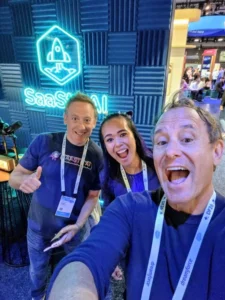
Industry leaders have begun to voice their support for this shift in infrastructure. During a recent keynote at the SaaStr AI conference, industry veterans noted that "pricing is now a core product feature." The sentiment is that in the AI era, you cannot separate what the product does from how you charge for it.
Analysts suggest that the companies that will dominate the next decade are those that can find the "Goldilocks zone" of pricing: high enough to capture value, but low enough to encourage viral adoption. Achieving this requires constant experimentation. If it takes six months to change a pricing plan in your system, you cannot experiment. If it takes six minutes, you have a strategic advantage.
Nue’s positioning as a "Gold Partner" for the upcoming SaaStr AI 2027 event in May reflects its growing influence in the ecosystem. The event is expected to focus heavily on the "Quote-to-Revenue" stack as the next major frontier for AI startups. Experts anticipate that by 2027, the "per-seat" model will be relegated to legacy tools, while the majority of new AI-native applications will run on sophisticated, multi-modal billing engines.
Broader Impact and Future Outlook
The broader impact of this shift extends beyond the software industry. As B2B AI becomes more integrated into the global economy, the way it is priced will influence how businesses budget for labor and technology. If software is priced by outcome, "software spend" will effectively become a variable cost of goods sold (COGS) rather than a fixed overhead expense. This has profound implications for corporate finance and how companies report their earnings.
Furthermore, the rise of platforms like Nue democratizes access to sophisticated financial operations. Small startups can now employ the same complex monetization strategies as industry giants like Amazon or Snowflake without hiring a 50-person RevOps team. This levels the playing field, allowing the best AI models to win based on value rather than who has the better billing department.
In conclusion, the "hardest problem in B2B + AI" is indeed the challenge of pricing. The transition from human-centric to agent-centric software requires a total reimagining of the financial stack. Nue represents the first major wave of infrastructure built specifically for this transition. By treating pricing not as a static setting but as a dynamic product feature, Nue is enabling the next generation of AI companies to capture the immense value they are creating. As the industry gathers for SaaStr AI 2027, the focus will undoubtedly be on how to turn the "intelligence" of AI into sustainable, scalable revenue—and the tools that make that possible will be at the forefront of the conversation.